
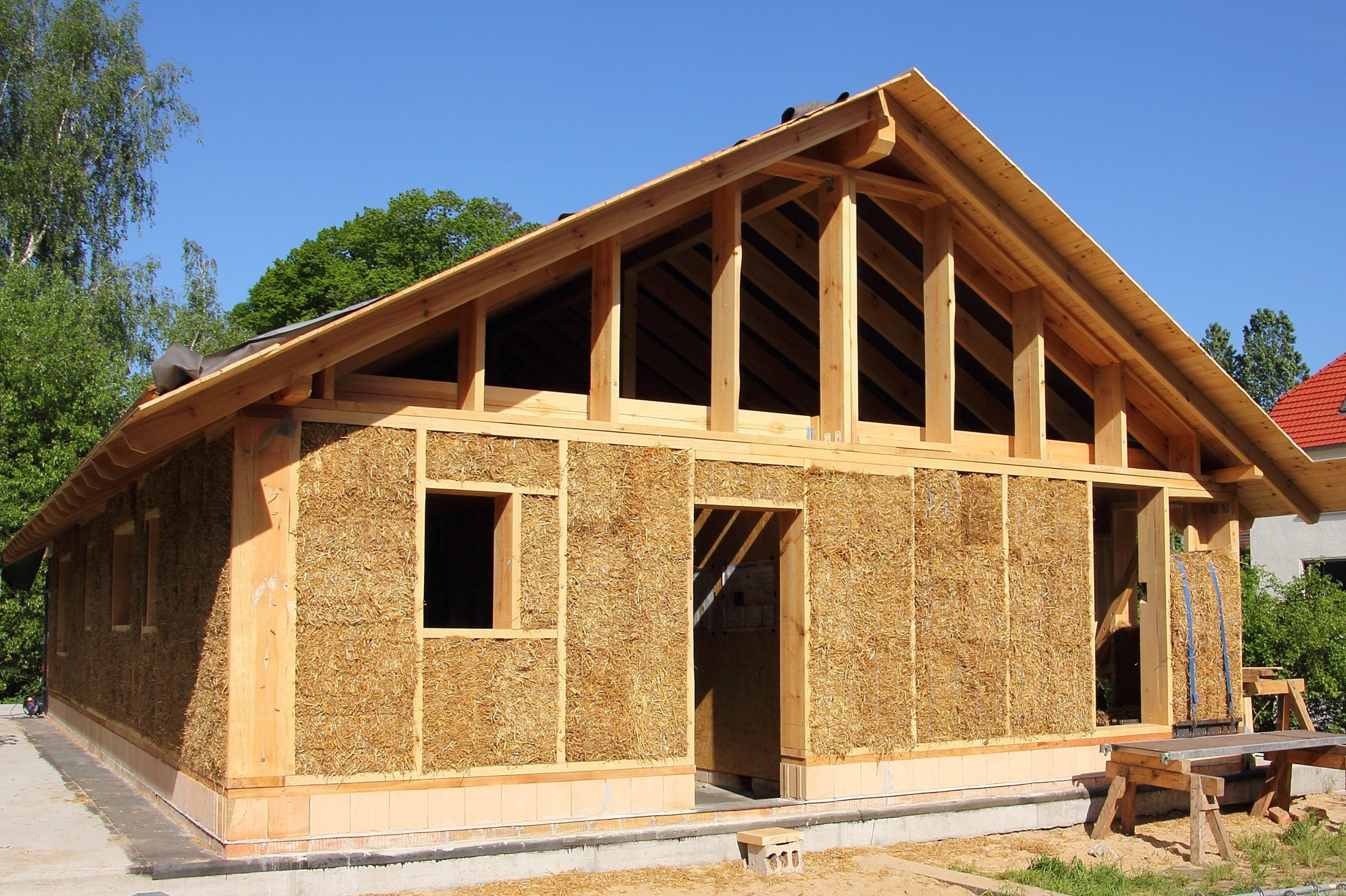
Are Straw-Bale Homes The Future?
Straw-bale homes are increasingly being discussed as a viable solution to the UK’s housing and climate challenges. While they may sound unconventional, they combine traditional building methods with modern sustainability goals, making them a compelling option for the future.
One of the strongest arguments for straw housing is its environmental impact. Straw is a renewable by-product of agriculture, with millions of tonnes produced in the UK each year, enough to potentially build hundreds of thousands of homes. Instead of going to waste, this material can be repurposed into low-carbon housing that actually stores carbon within its walls, helping reduce overall emissions. In fact, studies suggest straw-based homes can significantly cut whole-life CO₂ emissions compared to conventional construction.
Energy efficiency is another major advantage. Straw bale walls are thick and highly insulating, meaning homes stay warm in winter and cool in summer with minimal energy use. This is particularly important in the UK, where rising energy costs and stricter building regulations are pushing for better-performing homes. Some straw buildings can even meet Passivhaus-level efficiency standards.
Affordability also plays a key role. Straw is inexpensive and often locally sourced, reducing both material and transport costs. Combined with relatively simple construction techniques, this opens the door for more accessible housing solutions, including self-build projects and community-led developments.
Beyond cost and sustainability, straw homes can offer healthier living environments. Natural materials such as lime and clay plasters help regulate humidity and improve indoor air quality by avoiding harmful chemicals. This aligns with growing demand for homes that support wellbeing as well as efficiency.
However, challenges remain. Straw must be carefully protected from moisture during and after construction to prevent rot, and there can be barriers around planning permission, mortgages, and public perception. Despite this, successful projects already exist in the UK, demonstrating that these homes can be durable, safe, and long-lasting when built correctly.
As the UK faces a housing shortage alongside a climate crisis, straw bale construction offers a rare combination of sustainability, affordability, and performance. While it may not replace traditional building methods overnight, it has the potential to become a key part of the future housing mix, especially as the demand for greener living continues to grow.